10 Safety Habits Every Person Living Alone Should Have

Living alone is one of the great luxuries of adult life. You eat when you want, sleep when you want, and nobody judges you for watching four episodes of the same show on a Tuesday night.
But there’s a trade-off nobody talks about until they have to: when something goes wrong, there’s no one there to notice.
Not to make it dramatic. Most days, nothing goes wrong. But the people who live alone and feel genuinely safe about it aren’t the ones who got lucky. They’re the ones who built a few quiet habits into their routine.
Here are ten of them.
1. Tell Someone Your Routine
You don’t need to share your location 24/7. You just need one person who knows your general pattern. What time you usually wake up. When you leave for work. When you’re typically home.
This doesn’t require a formal conversation. It’s just making sure that if you suddenly deviated from your normal, someone would notice within a day - not a week.
2. Set Up a Daily Check-In
This is the simplest, highest-impact habit on the list. Once a day, you signal to someone that you’re okay. If you don’t, they know to check on you.
It can be a text. It can be an app. The method matters less than the consistency. The point is closing the gap between something happening and someone finding out.
For people who live alone, that gap is the real danger. A fall, a medical event, a break-in - the outcome often depends on how quickly someone responds. A daily check-in shrinks that window to hours instead of days.
3. Keep Your Phone Charged and Reachable
This sounds obvious until you think about how many times you’ve let your phone die on the couch while you were in the other room. Or left it in the car. Or put it on Do Not Disturb and forgot.
When you live alone, your phone is your lifeline. Keep a charger in more than one room. Charge it before bed. And if you use Do Not Disturb, set your emergency contacts to break through it.
4. Make Your Entry Points Visible
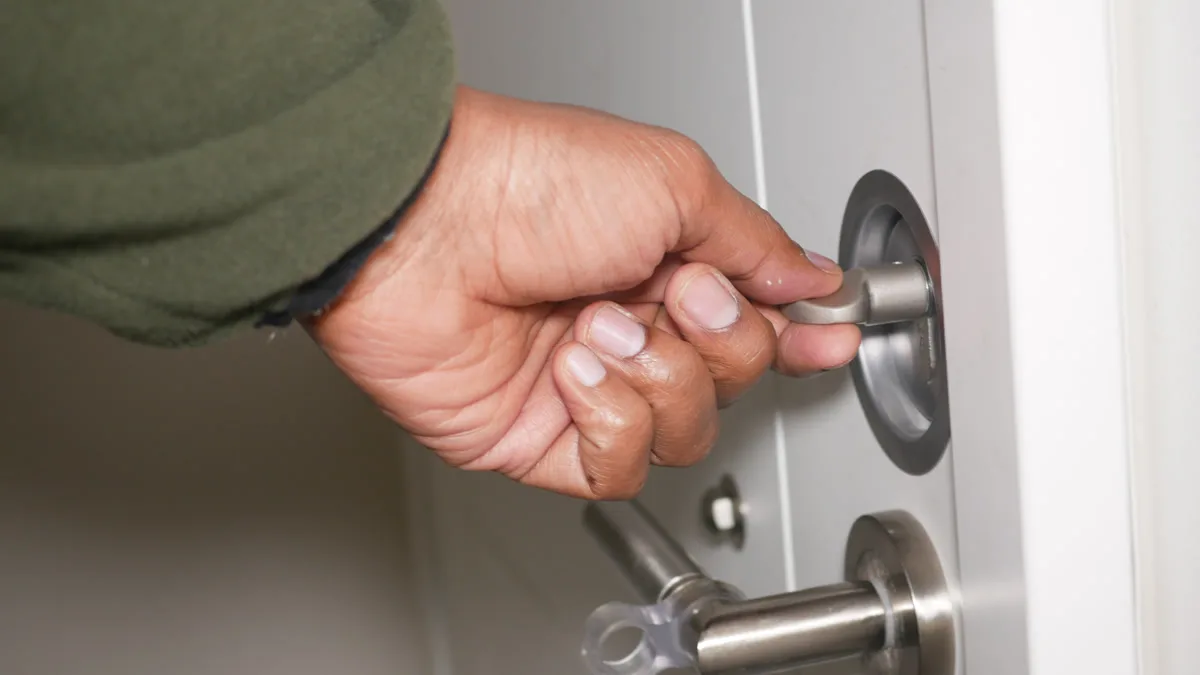
Burglars look for the path of least resistance: unlocked windows, dark entryways, overgrown bushes that block the view from the street.
You don’t need a security system to fix this. A couple of motion-sensor lights, trimmed landscaping near doors and windows, and a habit of actually locking up every night go a long way. If you have a sliding glass door, a simple bar in the track is one of the cheapest and most effective deterrents there is.
5. Know Your Neighbors (At Least a Little)
You don’t have to be best friends. You just need to be familiar enough that they’d notice something off - your dog barking for hours, your car in the driveway for days when it shouldn’t be, your packages piling up.
Introduce yourself. Exchange numbers. Even a “hey, I’m going out of town for a week” text goes a long way toward building the kind of low-key awareness that keeps solo dwellers safer.
6. Keep an Emergency Contact on Your Lock Screen
If you’re found unconscious, the first thing a paramedic does is check your phone. Make it easy for them.
On iPhone, set up Medical ID. On Android, add emergency information in Settings. Include your emergency contact, any allergies, medications you take, and your blood type if you know it. This takes two minutes and could save hours in a crisis.
7. Don’t Announce That You Live Alone
This isn’t about being paranoid. It’s about being strategic.
Don’t mention it to delivery drivers, repair workers, or strangers who ask. If someone comes to your door and asks if your husband or roommate is home, “they’re busy right now” is a perfectly fine answer. On social media, avoid posting in real time when you’re away from home - save the vacation photos for when you’re back.
8. Have a Plan for Getting Sick
When you live with someone and get the flu, they bring you soup and check your temperature. When you live alone and get the flu, you might not eat for two days because standing up feels like a project.
Stock your medicine cabinet now - not when you’re already sick. Keep electrolytes, basic meds, a thermometer, and easy-to-prepare food on hand. And tell a friend or family member when you’re not feeling well. Not for sympathy. Just so someone knows to check on you if they don’t hear from you.
9. Store Your Important Info Somewhere Accessible
If something happened to you, could your family find your insurance information? Your bank login? Your medication list? The number for your landlord?
Most people who live alone are the only person who knows where anything is. That’s fine on a normal day. On a bad day, it’s a crisis on top of a crisis.
An encrypted vault, a secure document, even a sealed envelope in a trusted friend’s hands - whatever the format, get the critical stuff organized and make sure someone else can find it.
10. Trust Your Instincts
This one doesn’t have a product or a template. It’s just this: if something feels off, act on it.
The parking garage that’s too quiet. The knock on the door you weren’t expecting. The guy who’s been walking behind you for three blocks. You don’t owe anyone the benefit of the doubt at the expense of your safety.
Cross the street. Don’t open the door. Leave the store. Call someone. Your instincts evolved over millions of years for exactly this purpose. Let them do their job.
The Common Thread
None of these habits are complicated. Most of them take less than five minutes to set up and zero effort to maintain. But together, they do something powerful: they close the gaps that living alone quietly creates.
You chose to live independently. That’s a good thing. But independent doesn’t mean invisible. The smartest solo dwellers aren’t the ones who never worry. They’re the ones who built a few small systems so they don’t have to.
Start with one. The check-in. The lock screen. The neighbor’s number. Whatever feels easiest. Then add another one next month.
You don’t need all ten by Friday. You just need to stop assuming that “I’ll be fine” counts as a plan.
Check In Circle is a daily safety check-in paired with an encrypted vault. One tap a day - if you miss one, the people you trust are notified. Built for people who live independently and want to stay that way. Learn more